
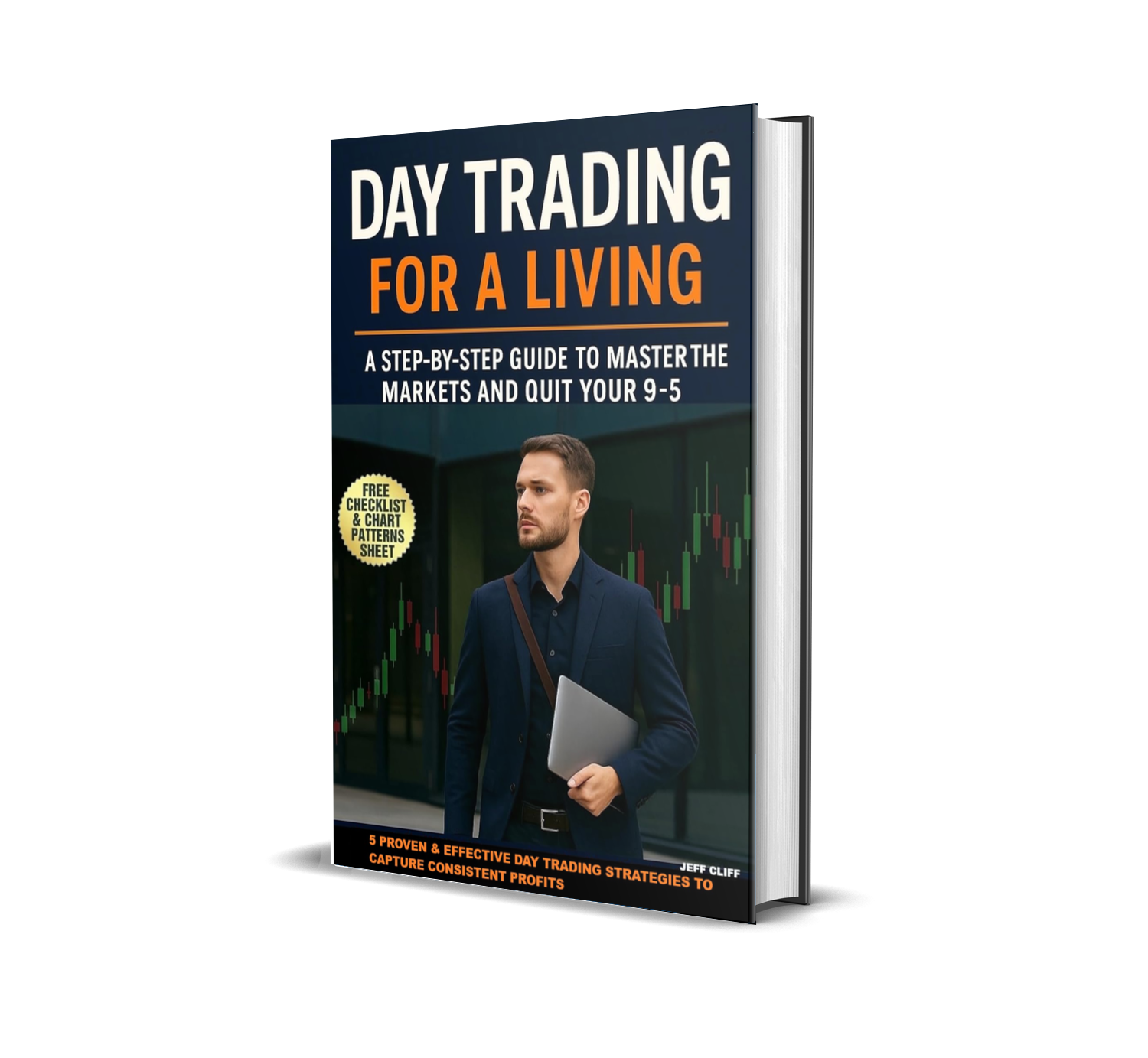
 Day Trading for a Living: 7 Brutal Truths You Must Accept Before You Quit Your 9–5
Reality checks no one on YouTube tells you before you “go full-time”
If you’ve ever sat at your job thinking, “If I can just make $300–$500 a day trading, I’m out of here,” this post is for you.
I’m not here to kill your dream — I’m here to protect it. Day trading for a living is possible. But the traders who actually make it long-term all swallowed a few uncomfortable truths before they ever told their boss “I quit.”
1. Consistency Takes Way Longer Than You Think
Most traders think, “Give me 6–12 months and I’ll be consistent.” In reality, it can take 12–36 months of focused, structured work to become truly consistent — and that’s if you’re serious about journaling, backtesting, and refining one strategy.
- You’re not just learning a setup; you’re rewiring your reactions to fear and greed.
- You have to survive a full cycle of market conditions (trending, choppy, slow, high-volatility).
- You’ll go through winning streaks that make you overconfident, and drawdowns that make you doubt everything.
2. Your P&L Will Not Look Like a Paycheck
A salary hits your account every two weeks whether the market was clean or choppy. Trading income doesn’t care about your rent due date.
As a full-time trader, you’ll have:
- Green weeks that feel amazing.
- Barely-breakeven stretches where the market is slow.
- Occasional red weeks that test your faith.
You might average “$300 a day” over a quarter, but it won’t come in a smooth daily line. If your lifestyle needs a predictable paycheck, this emotional roller coaster can break you long before your strategy does.
3. Psychology Will Be Your Real Boss
When there’s no boss watching, no time clock, and no HR department, your real enemy becomes you.
- Revenge trading after a loss.
- Oversizing to “make it back.”
- Taking random trades because you feel pressure to “pay the bills.”
Trading becomes 20% strategy and 80% emotional control. If you can’t follow your rules on a small account while employed, you’ll almost certainly break them when trading is your only income.
4. You Need a Real Edge — Not Just “I’m Good at Charts”
“I have a good feel for the market” is not an edge. Your landlord can’t cash “good feel.”
A real edge looks like:
- One to three clearly defined setups (with screenshots) you trade over and over.
- Backtested stats: win rate, average R multiple, max drawdown.
- Risk rules: max loss per day, per trade, weekly circuit breakers.
If you don’t know your numbers, you have no way to size correctly, no way to know when to scale, and no way to tell if a losing streak is normal variance or your edge fading.
5. Risk Management Is More Important Than Being Right
Most new traders fantasize about being right 80–90% of the time. Professionals focus on how much they lose when they’re wrong.
- A 40–55% win rate can still produce a great income if your winners are bigger than your losers.
- One oversized, emotional trade can wipe out two weeks of solid execution.
- Your future as a trader lives or dies on how you behave when you’re down on the day.
6. The Lifestyle Is Less Glamorous Than Instagram Shows
Yes, you can avoid traffic, co-workers, and office politics. But the “freedom” also comes with:
- Hours of screen time and waiting for A+ setups.
- Loneliness if nobody around you understands trading.
- Days where you do everything right and still end red.
You need routines outside of trading — exercise, relationships, hobbies — or the P&L will become your identity, and every losing day will feel like a personal failure.
7. You Still Need Cash Reserves and a Plan B
Going full-time with no savings is not bravery — it’s self-sabotage.
Before you quit, strongly consider:
- 6–12 months of living expenses saved in cash.
- A separate trading account you can afford to lose without homelessness on the line.
- A backup income option (freelance, part-time work, skills you can monetize).
When your rent, food, and family are depending on today’s trade, you won’t be thinking about clean execution — you’ll be thinking about survival. And survival mode destroys discipline.
Final Thoughts: Don’t Kill the Dream — Prepare for It
Day trading for a living is not a fantasy. There are traders quietly doing it every single day. But they didn’t get there by manifesting, guessing, or copying alerts — they got there by accepting these brutal truths and building a plan around them.
Use your 9–5 as your first investor. Let it fund your education, your data, your journal, and your screen time. When your trading results prove you’re ready — consistently, on paper — the decision to go full-time becomes logical, not emotional.
You don’t have to rush. The market will still be here a year from now. The question is: Will you be the same trader… or a prepared one?
📘 Day Trading for a Living — The Full Playbook
In Day Trading for a Living: A Step-by-Step Guide to Master the Markets and Quit Your 9–5, I walk you through the full process — from building a proven edge and tracking your stats, to planning your exit from the 9–5 the smart way (not the desperate way).