 Dissecting Bull Flag Breakouts
Flagpole Energy, Coil Quality, and Breakout Timing
📅 If you’re a day trader or swing trader searching for high-probability setups, the Bull Flag pattern is one strategy you can’t afford to ignore.
In this post, we’ll break down what a Bull Flag is, how to identify it on a chart, and how traders use it to capitalize on trend continuation with precision and confidence. We’ll look at flagpole energy, coil quality, and breakout timing so you’re not just guessing when to jump in.
1. What Exactly Is a Bull Flag?
A Bull Flag is a trend continuation pattern. First, price rips higher in a strong impulse move (the flagpole), then pauses and pulls back in a tight, controlled consolidation (the flag), before breaking out in the direction of the original trend.
In simple language: the market sprints, catches its breath, then sprints again.
Your goal as a trader is to enter during the pause and ride the next leg of the trend — not chase the move after it’s already extended.
2. Flagpole Energy: Why the First Leg Matters
Every good Bull Flag starts with a powerful flagpole. Without strong initial momentum, the “flag” is just random chop.
Here’s what I look for in a strong flagpole:
- Sharp, directional move up — minimal red candles
- Above-average volume — volume surges on the push
- Clean structure — higher highs and higher lows, not messy overlapping price action
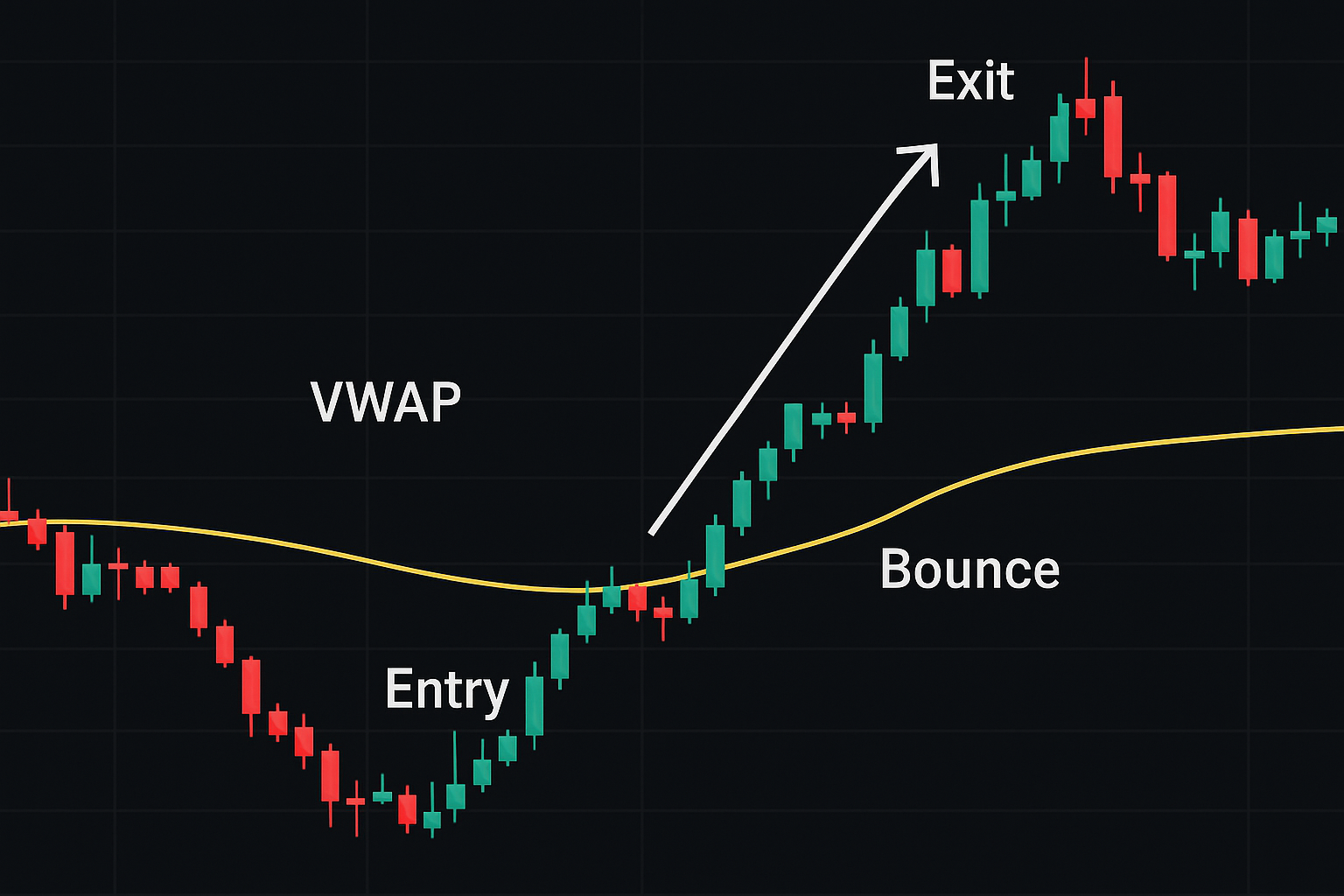
- Moves away from VWAP — shows real momentum and institutional interest
The stronger the flagpole, the more “fuel” there is for a second leg. Weak, slow flagpoles produce weak flags that fail more often.
3. Coil Quality: What a Healthy Bull Flag Looks Like
After the flagpole, price usually drifts sideways or slightly down. This is the flag — the coil. Not all coils are equal.
A high-quality Bull Flag usually has:
- Tight price action: candles overlap with small bodies, no wild swings or giant wicks
- Orderly pullback: shallow retracement, often 23–50% of the flagpole move
- Declining volume: volume dries up during consolidation as traders “wait”
- Respects a channel: price often forms a downward-sloping channel or small box range
When the coil is tight and controlled, it tells you traders are holding, not dumping. They’re waiting for confirmation, not rushing for the exit.
4. Breakout Timing: When the Flag Is Ready to Fly
One of the most common Bull Flag mistakes? Entering too early while the flag is still forming — or too late after the breakout has already gone.
Key timing clues a breakout is coming:
- Price begins to curl up toward the top of the flag range or channel
- A few small green candles appear with slightly higher volume
- The stock holds above VWAP or a rising short-term moving average (like the 9 EMA)
The actual breakout trigger is usually:
- A strong candle that closes above the flag’s upper trendline or the consolidation high
- A volume surge confirming that real buyers stepped in — not just a random blip
5. Entry, Stop, and Target: How I Trade the Bull Flag
The Bull Flag isn’t just a pretty shape. You need concrete rules to trade it with confidence.
My general approach:
- Entry: on a breakout above the flag high or trendline, ideally after a strong close near the top of the flag and a volume pickup
- Stop loss: below the flag low or the most recent higher low inside the flag — not too tight, not too wide
- First target: around the size of the flagpole projected from the breakout area
- Second target: key daily levels or extension targets (e.g. 2R, 3R, prior resistance)
Sometimes I’ll scale in smaller if the flag is developing beautifully and I want a starter position before the full breakout — but I keep that for A+ setups only.
6. Bull Flag vs. Fake Flag: Red Flags to Watch For
Not every pullback in an uptrend is a Bull Flag. Some are just distribution before a reversal.
Warning signs the pattern may fail:
- Deep retracement: price gives back most of the flagpole (more than 50–61.8%)
- Heavy selling volume during the consolidation instead of volume drying up
- Choppy, overlapping candles with big wicks in both directions
- Price repeatedly loses VWAP or key moving averages during the flag
- Broad market is weak, and the stock depends solely on momentum without a real catalyst
7. Bull Flag Checklist (Before You Enter)
Before I click buy, I like to run a fast Bull Flag checklist. You can literally keep this next to your monitor:
- ✅ Strong flagpole with momentum and volume
- ✅ Shallow, orderly pullback with declining volume
- ✅ Clear flag structure (channel or tight box)
- ✅ Price respects VWAP or a rising moving average
- ✅ Breakout forming near top of the flag, not in the middle
- ✅ Entry, stop, and targets defined in advance
- ✅ Position size respects your risk rules (1–2% max)
If too many boxes are unchecked, I’ll pass. There is always another Bull Flag tomorrow — but my capital is limited.
8. Final Thoughts: Flags Reward Patience, Not FOMO
Bull Flags are powerful because they combine momentum and structure. They let you enter a strong trend with defined risk instead of chasing a runaway candle at the top.
The catch? You have to be patient enough to wait for a clean flag, and disciplined enough to skip the messy, half-formed ones.
📘 The Anatomy of Bull Flag Trading Strategies: Dissecting Bull Flag Moving Parts
If you like Bull Flags, In The Anatomy of Bull Flag Trading Strategies, I will break down one of the most powerful continuation setups in technical analysis history —the Bull Flag—and shows you exactly how to spot it, trade it, and profit from it with precision and consistence.