 From VWAP Bounce to Profit:
My Go-To VWAP Strategy
If I had to throw away every strategy and keep just one setup, I’d keep the VWAP Bounce. It’s clean, visual, and brutally effective when you respect the rules.
In this post, I’ll walk you through exactly how I trade VWAP: the rules, the entries, the stops, the targets, and the common mistakes that blow traders up. By the end, you’ll have a plug-and-play framework you can start testing tomorrow.
1. What Is VWAP (And Why It Matters)?
VWAP stands for Volume Weighted Average Price. It’s the average price a stock has traded at throughout the day, weighted by volume. In simple terms:
If price is above VWAP: buyers are in control.
If price is below VWAP: sellers are in control.
Institutions and algorithms often reference VWAP as a “fair” price. That’s why price tends to react around it — either bouncing off it or rejecting it.
2. Why I Love the VWAP Bounce Setup
There are a million strategies out there, but the VWAP Bounce checks all my boxes:
- ✅ Clear structure: you always know where you’re wrong (a break of VWAP)
- ✅ Works on momentum names: especially stocks with news and volume
- ✅ Scalable: you can start small and size up with experience
I don’t need twenty strategies. I need one reliable play that I can execute repeatedly with discipline — and VWAP Bounce is that for me.
3. The Ideal VWAP Bounce Conditions
Before I ever take a VWAP trade, I want to see the right context. My checklist looks like this:
- Strong gappers: stock is gapping up in premarket with above-average volume
- Fresh catalyst: earnings, upgrade, news, sector sympathy, etc.
- Clean premarket structure: no wild chop all over the place
- Trending up at the open: higher highs / higher lows into VWAP, not a dying chart
If the stock is weak, low volume, or randomly chopping around VWAP, I skip it. No setup, no trade.
4. My Exact VWAP Bounce Playbook
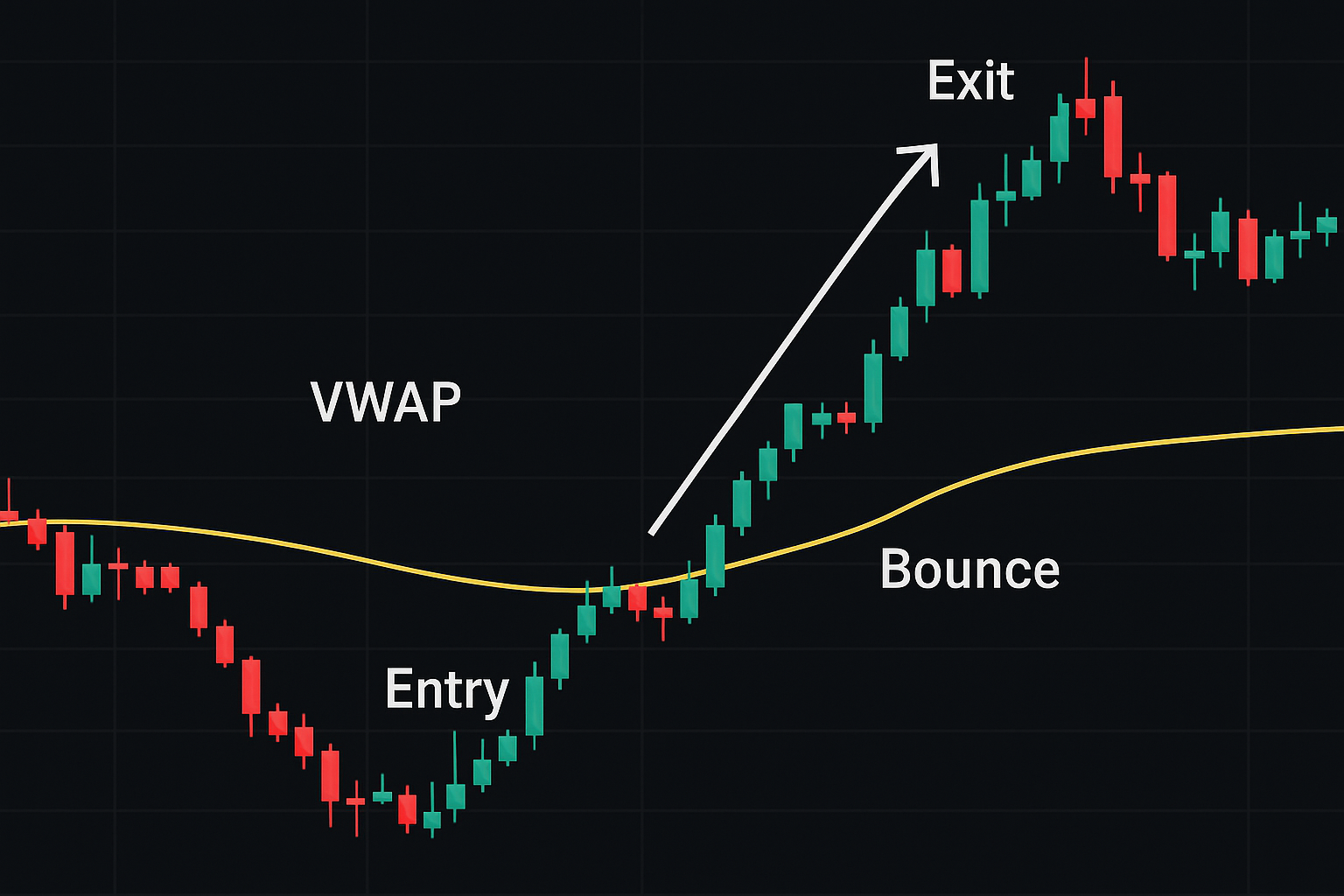
Here’s the core idea: we’re looking for a strong stock that pulls back to VWAP, holds it, and then continues the trend.
In simple steps:
- Stock gaps up with news and strong premarket volume
- At or after the open, price pushes up and then pulls back toward VWAP
- Price tags or slightly undercuts VWAP, then quickly reclaims it
- A higher low forms near VWAP with buyers stepping in
- You enter long on confirmation of the bounce (I’ll explain how next)
5. Entry Triggers: When I Actually Click Buy
This is where most traders get shaken out or chase. I keep my entry rules tight and simple:
- I want to see a reclaim candle — a candle that dips below or into VWAP but closes back above it on decent volume.
- Ideally, the next candle also holds above VWAP, confirming that buyers are defending the level.
- My entry is usually on the break of that reclaim candle’s high, or on a micro pullback right after the reclaim.
No reclaim? No trade. VWAP isn’t magic. It’s just a level. I need proof that buyers care about that level today.
6. Stop Loss & Targets: Where I’m Out (Win or Lose)
You don’t truly have a strategy until you know exactly where you’re getting out.
My basic rules:
- Stop loss: just below VWAP and the recent swing low (e.g., a few cents under the wick that tested VWAP)
- First target: prior intraday high (or 1.5–2R, whichever comes first)
- Secondary target: extension beyond high of day or key daily level
Once price hits my first target, I usually:
- Take partial profits (e.g., 30–50%)
- Move my stop to breakeven or just below VWAP
That way, I’ve locked something in and removed the emotional pressure, while still giving the trade room to run.
7. Example: A Textbook VWAP Bounce
Imagine a stock that gaps up 8% on earnings, trading heavy volume in premarket. At the open, it rips higher, then starts to pull back.
- Price pulls back from the high and drifts down toward VWAP.
- First touch of VWAP: a long wick under VWAP, but the candle closes above.
- Next candle forms a higher low and closes bullish above VWAP again.
- You enter on the break of that second candle’s high, with a stop just under the VWAP wick.
- Price pushes back to high of day → you take partial profit.
- Stock breaks out to new highs while you ride a trimmed position with a “free” runner.
You didn’t chase the open. You didn’t panic at the pullback. You waited for VWAP to prove itself, then executed your plan.
8. Common VWAP Bounce Mistakes (And How to Avoid Them)
VWAP isn’t the problem — undisciplined trading is. Here are the big mistakes I see:
- Buying the first tag of VWAP blindly: I wait for a reclaim, not just a touch.
- Trading weak names: if the stock is fading all morning, a VWAP “bounce” is often just noise.
- No clear stop: hoping VWAP magically “holds” without defining risk is asking for pain.
- Oversizing: big position sizes amplify fear and cause early exits or revenge trades.
9. My VWAP Bounce Checklist (You Can Steal This)
Before I take any VWAP Bounce trade, I run through this quick checklist:
- Is this stock strong today with news and volume?
- Is price trending up into VWAP (not collapsing through it)?
- Did price test VWAP and reclaim it with a solid candle?
- Do I have a clear entry, stop, and target?
- Is my size within my pre-set risk limits?
If any of those answers is “no,” I don’t take the trade. Discipline first, profit second.
Final Thoughts: One Setup, Many Opportunities
You don’t need to trade everything that moves. You need one clean, repeatable setup you can execute with confidence. For me, that’s the VWAP Bounce.
If you commit to mastering this strategy — tracking it, journaling it, and refining your rules — it can become a powerful weapon in your trading toolbox.
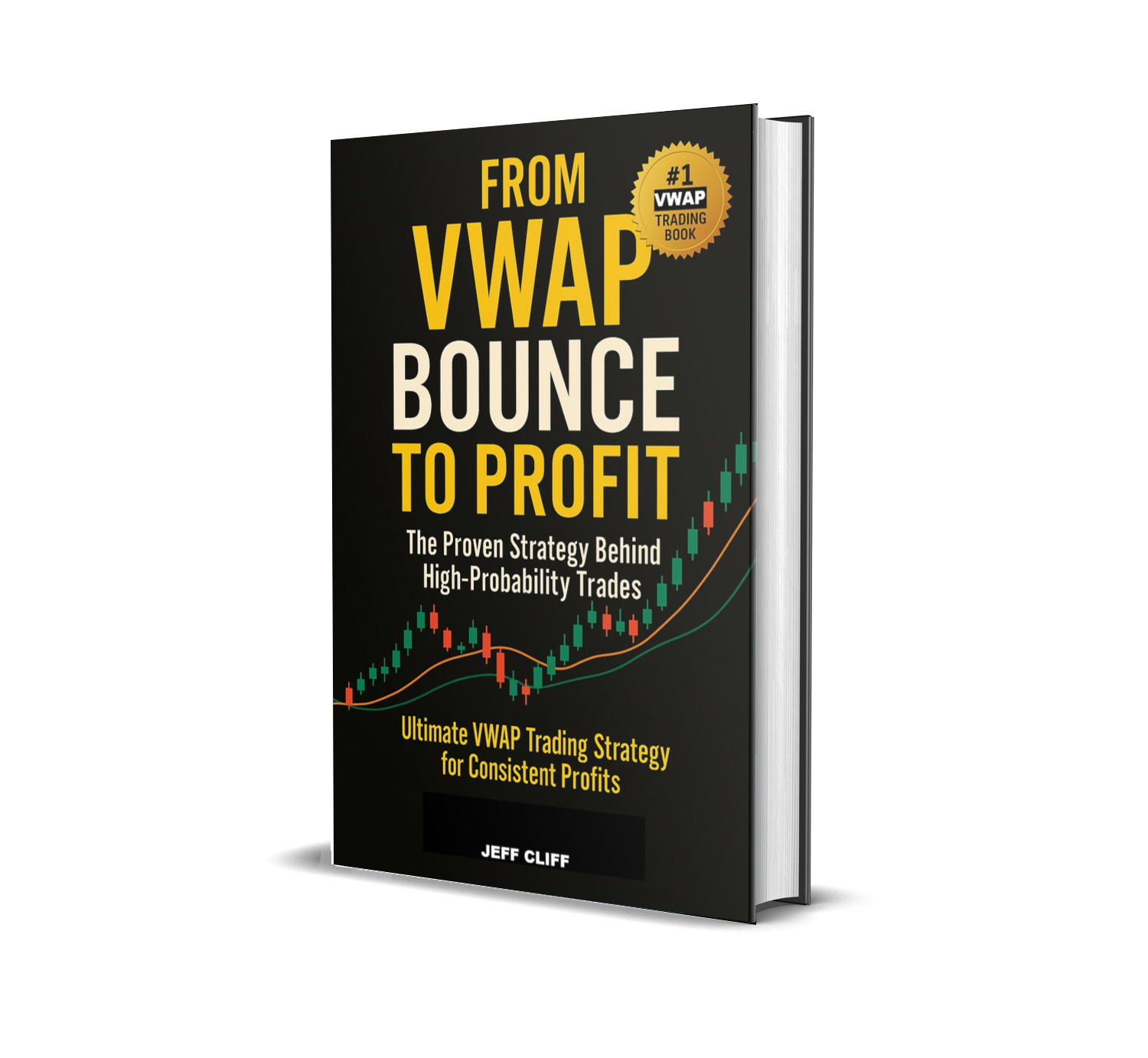
📘 From VWAP Bounce to Profit — The Full Playbook
In the book, I break down this strategy in greater detail: exact entry and exit patterns, chart examples, real trades (wins and losses), plus journal templates you can fill in every day.